
 Zac Hunter
 Vontaze Burfict blowing up Antonio Brown in 2016 for an incompletion has swayed the NFL to change its safety policies. Knowingly, Brown is the prime example of a player suffering from severe CTE following many TBIs like this instance in his career. Safety concerns and a more intense pace of play drive the commissioner’s office to stay on their toes every year to be more active in the game’s growth. With the most recent wave of changes, the evolution of football has been shown directly through the improvement and worsening of its rules.
Embed from Getty ImagesCTE is a common effect of playing football, especially at a high level like the NFL. Not only CTE but also concussions and TBI (traumatic brain injury) have been involved. The NFL has implemented the guardian cap. These caps are made of sealed, soft foam material that you put around the hard shell of a helmet to further protect your brain. They are slickly made not to break or attract water, so no added weight is felt on your head.
Sure, the thought is interesting, but does it work? While guardian caps might stick someone slightly softer, the technology has been questioned in its usage. While one report says it reduces the severity of impact by 10%, many sources and most players believe that the cap doesn’t do anything. So that brings the question, knowing the controversy behind this cap from fans and players, why would the NFL allow this change so players can wear them in games? While I think they look flat-out obnoxious and make a player look a little “soft,” it is a good change in the direction of the way this game is heading.
Many athletes suffer brain issues, including the recent Tua Tagovailoa. Tua has just had his third concussion since joining the NFL in 2020. When asked by a reporter about moving towards wearing a guardian cap in the game, he shied away from it and gave it no chance. This questions most football fans as they are seen worried for him and his health.
A second significant change to the game was the kickoff format, which relates to improving the safety of the players’ brains. The previous format involved a team kicking the ball and its players running full speed at the other team. Instead, the league shortened that run because it involved much head-to-head contact at full speed.
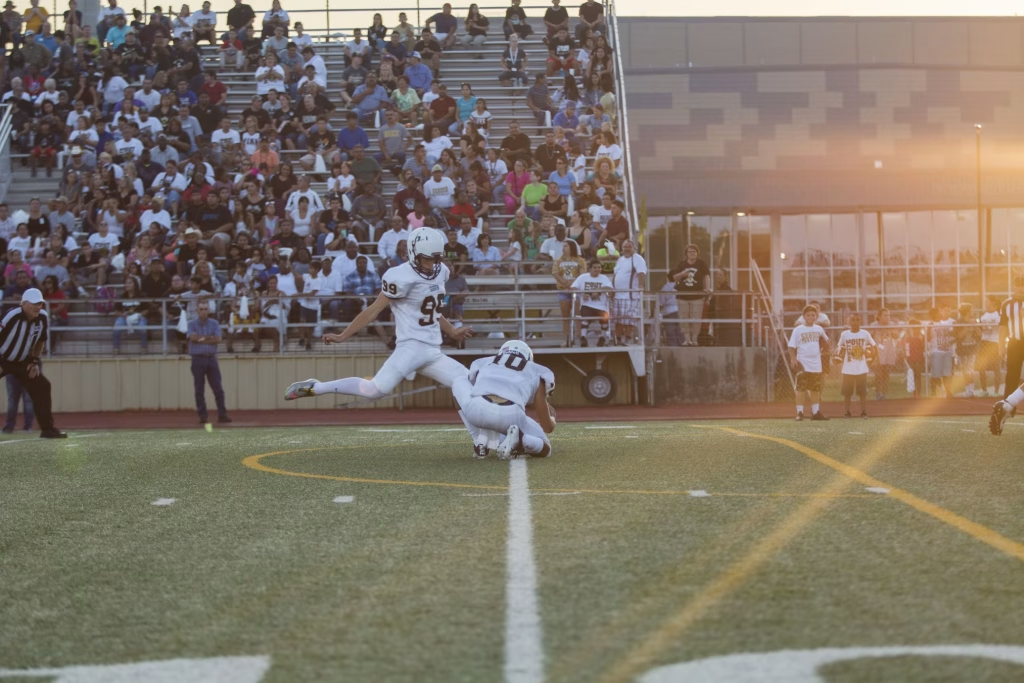
Now, the landing zone is in play. This zone is between the goal line and the receiving team’s twenty-yard line. If the ball is kicked into the end zone, the touchback is returned to the thirty-yard line instead of the previous twenty-five-yard line. Also, if the ball doesn’t reach the landing zone or goes out of bounds, it is placed on the forty-yard line as a penalty.
Another key move is the idea that the kicking team must announce an onside kick only in the fourth quarter. Recent confusion in the Monday Night Football thriller between the Ravens and the Buccaneers increased the number of onside kicks a team could attempt. This was a myth because there was only talk of a proposal to change the rule that tried to limit the amount of times you could complete this kick. Instead, they decided this proposal would be pointless because it counted out a team from doing something that was likely impossible.
Removing the surprise onside kicks and other action-packed plays is very dull. Pat McAfee was known for this type of surprise kick, where he would set up for an actual kick and then kick it to himself ten yards down the field. This added an exciting play to the game, but it has been removed due to the new kickoff format, as players are now lined up in new ways.
Embed from Getty ImagesA form of tackling deemed the “hip-drop tackle” was banned and is now subject to fines. If a defender rotates or swivels the ball carrier’s hips while dropping legs out of the air, it results in a fifteen-yard penalty. This rule change followed many major rugby leagues as they began enforcing this form of tackling. This was one of the very slim, good rule changes. I think it’s hard to avoid, so fining a player for doing it, unless entirely intentional, should not be the first move of action for the league.
Other minor changes include the change in challenges. Instead of having to acquire two successful challenges to award a third, only one of your two has to be successful to get a third.
My thoughts? I believe time will tell. While I wouldn’t say I like the new kickoff format, additions like the guardian caps and the banning of the hip-drop tackle drive the game into a better style of play with improvements to safety concerns. Experimenting with the kickoff format seemed unusual since we never saw any crazy examples of head injuries on kickoff returns over the past few years. Still, the NFL had enough evidence to believe that it led to more head injuries later in life.

Zac Hunter is a senior member of the Multimedia Journalism class.
About the Author


 Jonathan Govoni
 Noah Stewart
  Brian Trinh
 Anthony Glorioso
 Noah Woody